


Products
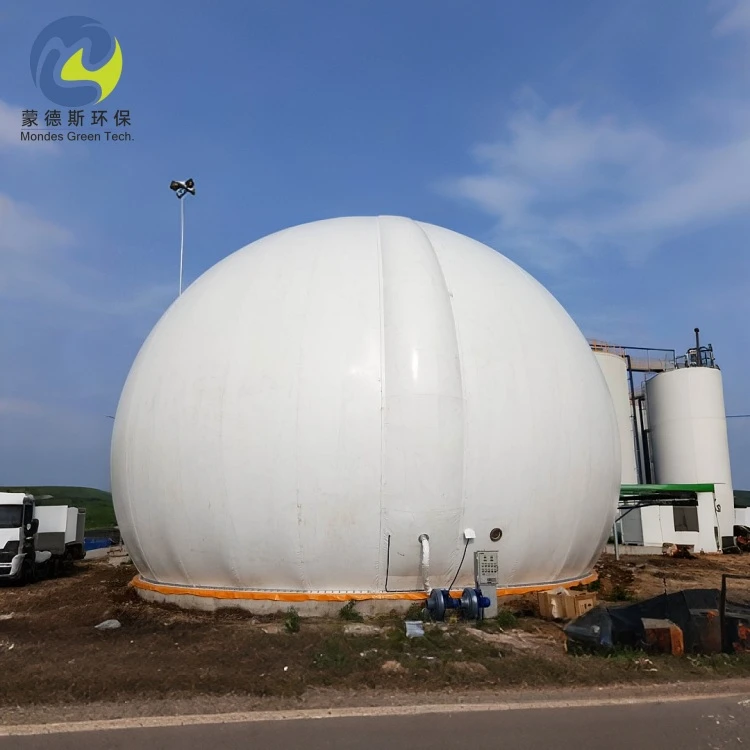

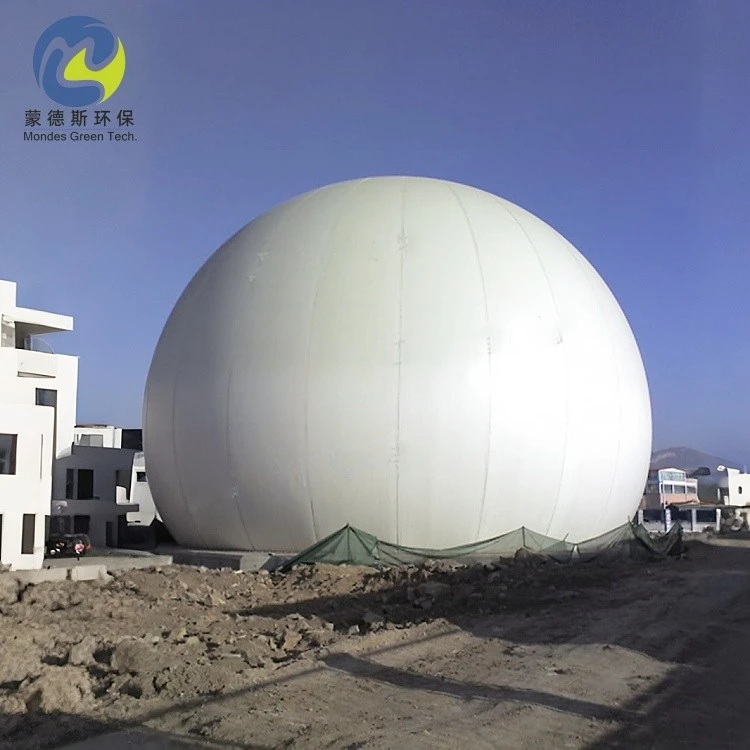
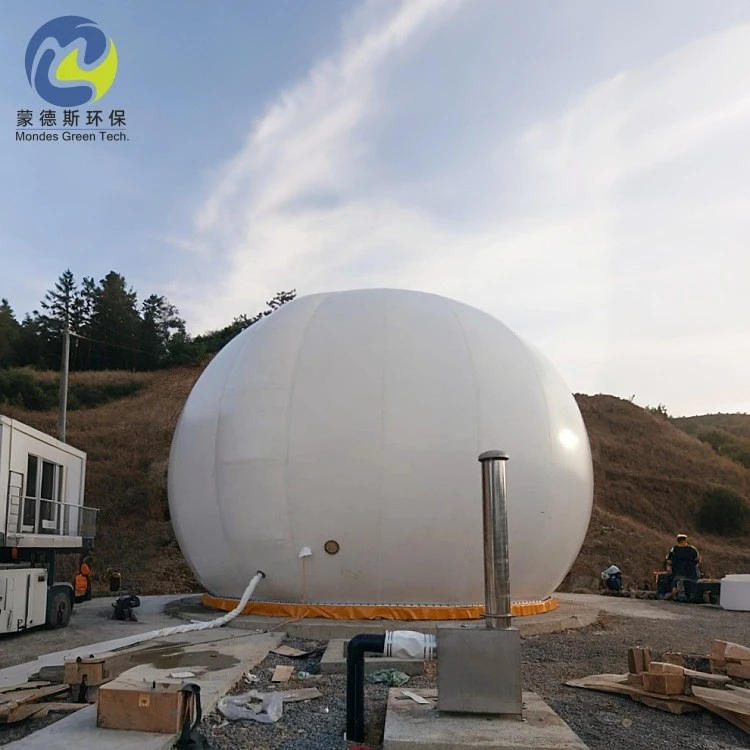
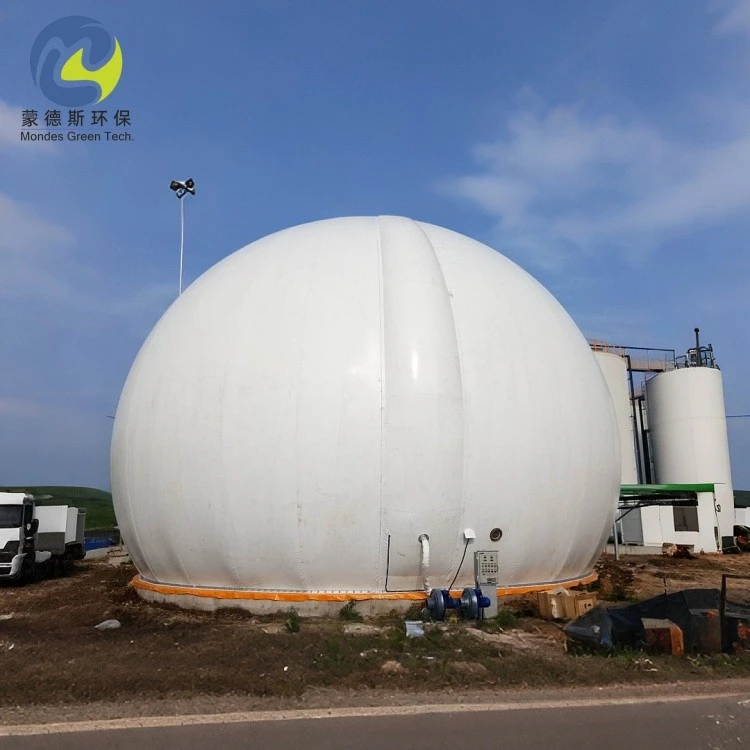

Double Membrane Gasholder
BIOGAS STORAGE TECHNOLOGY Double Membrane Biogas Holder: How Three Films Beat a Fixed Steel Roof A fixed-roof tank stores slurry, not gas. A double membrane biogas holder stores the methane and feeds your engine at a steady pressure. Here is the engineering, the reason plants switched, and how...
Features
Sichuan Mondes Green Technology Co., Ltd. is one of the leading double membrane gasholder manufacturers and suppliers in China. Please feel free to buy customized double membrane gasholder at competitive price from our factory. Contact us for more details.
Double Membrane Biogas Holder: How Three Films Beat a Fixed Steel Roof
A fixed-roof tank stores slurry, not gas. A double membrane biogas holder stores the methane and feeds your engine at a steady pressure. Here is the engineering, the reason plants switched, and how it stacks up against every alternative.
How a double membrane biogas holder works
The unit is a low-pressure, dry-seal store built from flexible fabric films instead of steel plates. A small blower does the work that a heavy pressure vessel does in rigid systems.
- The three films. A bottom membrane seals the concrete base, an inner membrane holds the biogas, and an outer membrane forms the weatherproof shell. On an integrated unit the digester roof acts as the bottom.
- The air cavity. A constant-duty blower pushes low-pressure air into the space between the inner and outer films, typically 0.5 to 1.5 kPa. That air keeps the outer shell rigid against wind and snow.
- The gas buffer. As the digester makes more biogas, the inner film expands into the cavity. As the engine draws gas, it contracts. The blower absorbs the difference, so outlet pressure stays flat.
- The safety layer. An over/under-pressure valve releases air if pressure strays, and gas-level alarms warn the operator. The system fails soft, not explosively.
Why plants moved away from fixed-roof storage
A conventional digester with a fixed roof is sealed for liquid, not built to buffer gas. Three problems pushed operators to the membrane holder:
No buffer
A fixed roof leaves almost no variable volume. Any swing in production or demand either vents gas or starves the engine.
H₂S corrosion
Hydrogen sulfide in raw biogas eats steel coatings. Membrane films shrug it off, so there is no repainting cycle.
Pressure risk
A rigid sealed tank that over-pressures has few safe outlets. The flexible film simply expands, and relief valves vent air, not methane.
What you get in practice
Steady pressure
Engines and flares receive gas at a near-constant low pressure, which protects combustion gear from flame-outs.
Low maintenance
No steel to coat, no structure to repaint. Routine care is a blower check and a valve test.
Modular build
Films ship folded; a crew erects the holder in days on a simple ring foundation.
Visible level
The outer film inflation shows stored volume at a glance, no separate gauge needed.
Site rating
Wind belts and snow ropes let the same design serve calm yards or exposed coastlines.
Fire class
Quality fabric carries a flame-retardant rating such as DIN 4102 B1; ask for the certificate, not a verbal claim.
Double membrane vs four alternatives
Buyers usually weigh the membrane holder against one of these. The right pick depends on budget, buffer need, and site.
| Attribute | Double membrane holder | Single balloon bag | Fixed-dome tank | Floating-drum roof | Steel pressure vessel |
|---|---|---|---|---|---|
| Pressure control | Constant, blower-set | Floats with volume | Near fixed | Moves with gas | Rigid, high pressure |
| Buffer capacity | Large, variable | Small | Almost none | Moderate | Large, but costly |
| Corrosion from H₂S | None in films | None | Coating attacked | Coating attacked | Needs lining |
| Capital cost | Moderate | Low | Low | Moderate | High |
| Best use | Steady engine feed | Small, tight budget | Cheap gas cap | Medium plants | High-pressure grid |
Sizing it in three numbers
Volume follows the gap between when gas is made and when it is used. You need three inputs:
1. Daily production: read it from the digester design, in Nm³ per day.
2. Consumption profile: how many hours the engine or flare runs, and at what rate.
3. Buffer hours: how long the holder must cover a production dip. Four to six hours suits continuous running; daytime-only plants need more.
Worked example: a digester making 1,200 Nm³/day with an engine that runs 18 hours at 60 Nm³/h leaves a 6-hour low window. At roughly 60 Nm³/h that is about 360 m³ of holder volume, before you add margin. Start every quote from these three numbers, not from a catalogue size.
Where it earns its keep
Agriculture
Dairy and pig manure digesters buffer gas for farm power and heating.
Food waste
Anaerobic digestion of food waste stores biogas before upgrading to bio-CNG.
Industrial effluent
Gas from IC, UASB, and EGSB reactors in brewing and pharma plants is recovered, not flared.
Municipal sludge
Digestion gas runs plant heat and power, cutting grid draw.
Landfill gas
Low-pressure wellhead collection and buffering at the gate.
Drinking-water plants
Sludge digestion gas offsets pump and process energy.
Frequently asked questions
Can a double membrane holder connect to an existing steel or concrete digester?
Yes. A standalone unit sits on its own ring foundation next to the tank, or an integrated unit bolts to the tank roof and uses it as the base. Retrofitting is common and avoids rebuilding the digester.
What is the typical film service life?
Standard PVC fabric in an exposed site runs about 10 to 15 years; better fabric and good tensioning reach 15 to 20 years. PTFE is rated far higher in supplier data but is replaced on maintenance cycles well before that. The frame, by contrast, lasts decades.
Does it need a separate gas booster?
At the usual 0.5 to 1.5 kPa outlet most generators and flares accept the gas directly. If downstream equipment needs higher pressure, a booster is added after the holder, not inside it.
How does winter affect the blower?
The blower runs continuously to hold pressure, which keeps the cavity from collapsing under snow load. Snow ropes and a rated tensioning system are added for cold sites so the outer film sheds snow instead of pooling it.
Is it safe in a methane atmosphere?
The system operates at low pressure and fails soft: relief valves vent the air cavity, not methane, and flame-retardant fabric limits fire spread. Multiple independent safety devices back each other up.
Spec your holder from real numbers
Send daily biogas production, engine run hours, and your site wind zone. We return a sized proposal with film spec, blower duty, and safety devices broken out.
WhatsApp: +86 159 0282 5209
Sichuan Mondes Green Technology Co., Ltd. · Double membrane biogas holders, GFS bolted tanks, and biogas storage systems. Built under ISO 9001 quality management. This page is informational and not a substitute for a site-specific engineering review.
Hot Tags: double membrane gasholder, China, suppliers, manufacturers, customized
No Information
You Might Also Like
 Learn More
Palm Oil Storage Tank
 Learn More
Double Membrane Gas Holder for Biogas Projects
 Learn More
Ground-mounted Dual Membrane Gas Balloon
 Learn More
Dual Membrane Gas Balloon on Digester
 Learn More
Dual Membrane Gas Domes in PVDF Membrane
 Learn More
Rectangular Dual Membrane Gas Domes for Lagoon
Send Inquiry
